 Perch & Focus
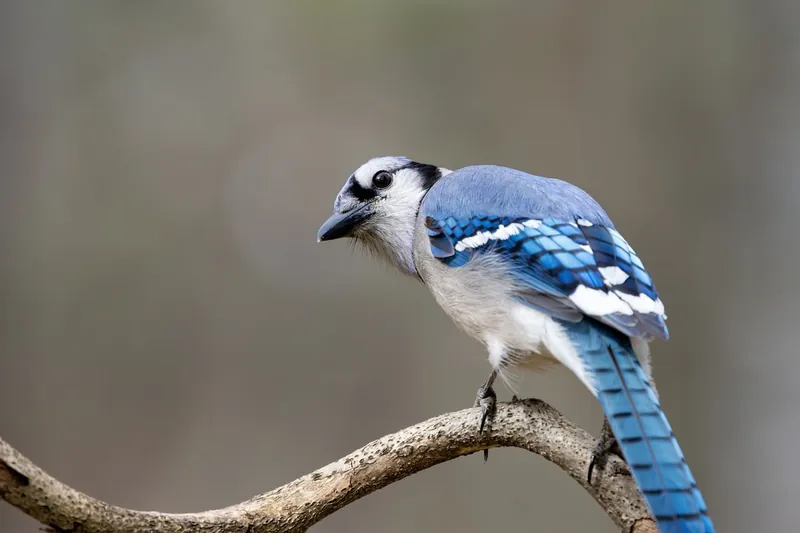
Blue Jay
Cyanocitta cristata
- Length
- 9.8–11.8 in
- Favourite feeder foods
- Peanuts, sunflower seed, suet
- Best feeder
- Platform or tray feeder; hopper feeders
- Where it lives
- Year-round across the eastern and central US; some northern birds move south in fall
Big, loud and crested, the Blue Jay is hard to overlook. Its blue isn’t a pigment: the feathers’ internal structure scatters light so they look blue. Crush a feather and the color disappears.
Jays often imitate the calls of hawks, especially the Red-shouldered Hawk. Scientists aren’t sure why, but it may warn other jays or clear a feeder of competition.
They carry acorns in a throat pouch and bury them for later. Because many are never retrieved, Blue Jays are credited with helping oak forests spread after the last ice age.
Source: Cornell Lab of Ornithology, All About Birds.